More inspections do not mean better reliability
A common misconception around inspection management tools is that adopting them means doing more inspections. In practice the opposite is true. An inspection capability inside a CMMS/EAM exists to give structure, follow-up and a feedback loop so that inspections can be streamlined over time — not multiplied.
Years ago many clients told us they could not reduce inspections because regulations required them. Today the conversation has sometimes flipped: the mere presence of a mobile inspection tool is taken as a signal that more checks are wanted. Neither view matches the intended approach. The goal is fewer, better-targeted and shorter inspections, except where law or regulation makes them mandatory.
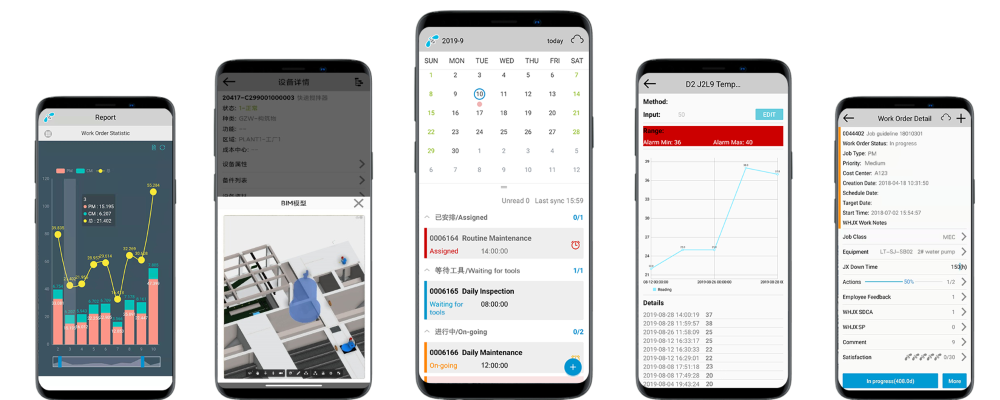
bluebee® Smart O&M is one of the few CMMS/EAM platforms with true native inspection capability. The first bluebee app, released in 2007, was inspection-focused rather than a full CMMS; the broader system grew from that foundation. Siveco China therefore brings long, practical experience of inspection management in the Chinese market.
What the approach actually is
Siveco China’s methodology, refined over more than twenty years of projects in China and now taken overseas, follows ISO 55000 principles. Work is prioritised by asset criticality and risk. Resources go where failure has the highest impact on reliability, availability or compliance. Low-value or ineffective checks are candidates for elimination or reduction.
Computerising inspections does not by itself create more work. When the content is lean, it replaces paper or Excel, makes results visible, and connects them to work orders, spare parts, failure history and strategy review. The closed loop is the point: field observations improve the next plan. Over successive cycles both the number of inspections and the time spent on them should decrease for non-mandatory items.
Statutory or regulated inspections remain mandatory. They are simply executed and recorded more reliably inside the same system. The tool does not invent extra regulatory requirements.
Where perceived overload actually comes from
In many implementations the client has little or no history of systematic inspection. Project teams (or the client themselves) then upload thick Excel templates that were never really used, or create new ones by copying generic industry standards. Dozens of checklist items land in the mobile app. Field users experience complexity and “useless work”; the tool is blamed.
This is a content problem, not a tool problem. It is not what a risk-based CMMS/EAM implementation or ISO 55000 calls for. Uploading every possible check that can be found in a standard is the opposite of streamlining. The correct sequence is to start with what is already performed or legally required, focused on critical assets, then use data to refine.
Practical principles for lean but controlled inspections

- Start with critical assets and with inspections already done or mandated. Do not invent new checklists from generic standards. Import only what the organisation can realistically execute and what risk or regulation justifies.
- Prefer automated collection wherever it exists. SCADA, smart sensors and meters should feed the system directly. Manual mobile inspection is reserved for points sensors cannot cover and for judgements that require human senses or experience.
- Use CMMS data to thin the programme. Failure history, work-order outcomes, asset criticality and condition trends show which checks add value and which can be reduced in frequency or removed. Review templates periodically; do not treat the first upload as permanent.
- Keep mandatory items mandatory and everything else flexible. Regulatory or high-consequence checks stay enforced (scan, photo, threshold that opens a work order). All other items are candidates for reduction once evidence supports it. The system provides structure and traceability; it does not require volume.
Conclusion
An inspection management capability does not equate to more inspections. Its purpose is structure, follow-up and a feedback loop that supports reliability. Properly scoped, the net effect is less field time on low-value checks and more reliable execution of the checks that matter.
The practical next step, for both clients and implementation teams, is to review current templates against actual risk, actual practice and actual regulation — not against the longest checklist that can be found. That review is where streamlining begins.
This perspective is grounded in bluebee’s origins as an inspection application in 2008 and in Siveco China’s subsequent years of refining the approach in China.