Dialogue with Bruno Lhopiteau, Founder & CEO of Siveco China: 26 Years of Deep Roots in China’s Smart O&M Sector
This interview was conducted by CXO UNION in collaboration with Mr. Yang Bin, a senior industry expert and former SAP Greater China executive. It features an in-depth dialogue with Mr. Bruno Lhopiteau, CEO and founder of Siveco China, who brings 26 years of hands-on experience in the Chinese market, focusing on the frontiers of Smart Operation & Maintenance (Smart O&M) and advanced asset management. This article is based on the original video interview published by CXO UNION.
Mr. Bruno Lhopiteau is a 26-year veteran in China’s maintenance management industry. He is widely recognized as a pioneer who has both witnessed and significantly contributed to the country’s infrastructure development and the advancement of digital solutions for asset management.
Recalling an encounter at the Three Gorges Hydro Power Plant in 2002
Interviewer Yang Bin recalled how in 2002, while working for SAP, he encountered a formidable competitor in the Three Gorges Hydropower Plant digitalization project. That competitor ultimately won the project and went on to build a remarkable track record in EAM in China — someone he deeply respects: Mr. Bruno Lhopiteau.
High Technologies for Maintenance Are Not New
Bruno emphasized that maintenance methodologies, predictive maintenance, and expert systems are not new concepts. He shared his own experience studying these disciplines at university in the 1990s and as a young professional, focusing on predicting the behavior of rotating machinery using mathematical models (what would later be called “AI”).
Founding an Industry Pioneer in 2004
Bruno moved to China at the end of 1999 to develop the EAM business for IFS, securing major clients such as Qinshan Nuclear Power Plant and Shanghai Metro. Anticipating the evolution of the market, he founded Siveco China in 2004. Combining maintenance consulting with digital solutions, the company was among the first to focus on environmental infrastructure and overseas projects (at a time when the Belt and Road Initiative had not yet been launched).
Differences Between CMMS, EAM, and Smart O&M
Bruno noted that there is no fundamental difference between CMMS and EAM — the latter was largely a marketing term introduced by one supplier in the mid-1990s. When Siveco China was founded, the company deliberately chose to use “CMMS” to highlight its strong industry background rather than a pure IT focus. Later, Siveco China coined the term “Smart O&M” to reflect a broader scope that includes risk management, ESG, and HSE.
Siveco China’s Unique Advantages Are Hard to Replicate
Ultimately, Siveco China’s competitive edge lies in its deep industry expertise and practical experience. The company develops digital tools that frontline workers can actually use. These solutions are implemented based on international standards such as ISO 55000, which Siveco China has refined through more than 20 years of hands-on application in China. This advantage has helped the company win major projects, including the Integrated Waste Management Facilities in Hong Kong, the 10th of Ramadan Light Rail in Egypt, the Phnom Penh Water Supply project in Cambodia, and numerous industrial clients across China.
Alignment with China’s Megatrends
Siveco China is recognized in the industry for its pioneering work in line with China’s national policies — supporting infrastructure development, safety, environmental compliance, and the Belt and Road Initiative. The company also embraced open-source platforms and was an early digital pioneer, launching mobile solutions for field workers as early as 2007 from its R&D center in Shanghai.
Integrating into Chinese Culture as a Foreigner
After living in China for 26 years, Bruno feels a strong sense of belonging. This comes naturally because his work directly addresses China’s needs for sustainable infrastructure, improved safety, environmental protection, and Belt and Road development. He has always felt his contribution is welcomed. On a personal level, he also notes that his entire family — his wife and children — were all born in China.
Building a Corporate Culture
Siveco China’s culture stems from being a pioneer and innovator for over 20 years in China’s highly competitive digital landscape. Participation in numerous major domestic projects and Belt and Road initiatives creates a rich and exciting work environment. Bruno has trained many professionals in the industry, and all members of the current management team have more than 15 years of experience with the company. Siveco China is widely regarded as a homegrown Chinese company, which Bruno considers very important. He describes the past 20+ years as a great adventure, with still tremendous potential ahead in China and abroad.
Show and Tell
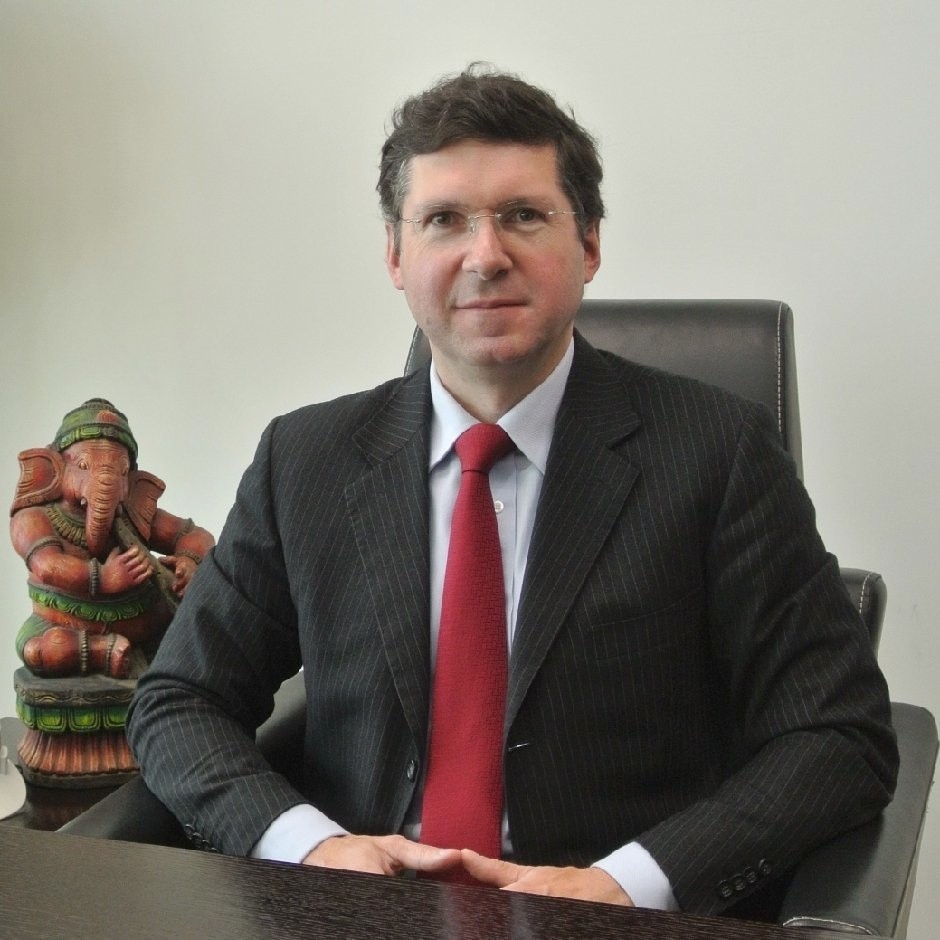
During the interview, Yang Bin asked Bruno about a red wooden statuette visible in the background: the Indian god Ganesh, a gift from India’s Ministry of Power delegation after Bruno organized their visit to the Three Gorges Dam. There was also a vivid poster of the French Communist Party in view. Yang Bin further asked Bruno to show his Chinese Permanent Resident Card — Bruno was among the first foreigners to receive one in 2006.
Competition and Confusion in the Chinese CMMS Market
Bruno described the post-Covid market confusion: while traditional players have become less active, many IT suppliers from different backgrounds now claim they can deliver CMMS/EAM solutions. Some company IT teams even try to develop their own systems, believing it to be cheap and easy. This ignores the reality that there are very few truly successful EAM suppliers worldwide. The project failure rate remains very high, and several copycat companies — including some that imitated Siveco China — have gone bankrupt.
Economic Slowdown and Maintenance Management Strategies
Even today, many companies have yet to optimize their asset management, representing significant untapped cost-saving potential. In a period of relative economic slowdown and intense competition, industrial companies could achieve far better results by improving asset utilization rather than resorting to blind cost-cutting. However, many tend to delay such projects and struggle to prioritize properly, which contributes to the high failure rate. Both clients and IT suppliers often lack the necessary know-how and experience.
Advice for Clients Launching an EAM Project
Bruno believes the earlier, the better. The best time to implement an asset management system is during plant construction; the next best time is now. Companies often fail to prioritize asset management initiatives effectively. Involving real industry experts — rather than pure IT vendors — is essential. Bruno shared several examples where Siveco China helped clients evaluate their assets and maintenance processes to identify potential savings using structured, scientific methods.
Standards and Methodologies in Asset Management
The two speakers discussed the importance of standardized methodologies in asset management projects. Siveco China has extensive experience applying standards such as ISO 55000 to help customers prioritize needs and focus on value-adding outcomes, including improved safety, regulatory compliance, and asset reliability.
Upcoming Trends in the Asset Management Field
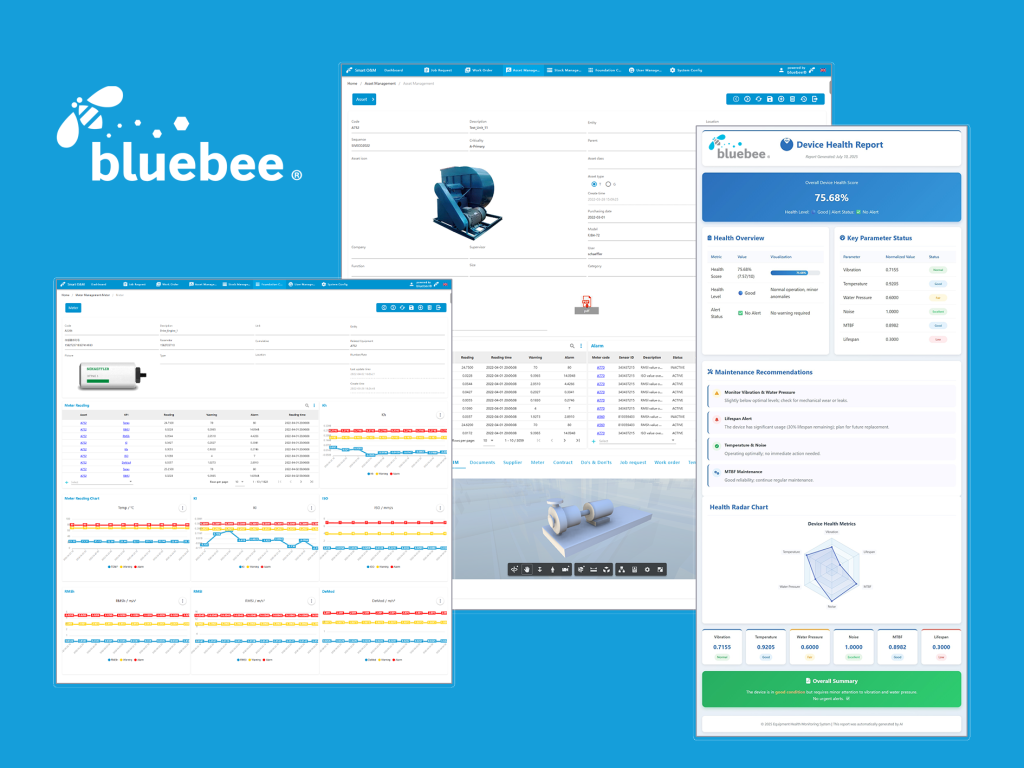
Working with academic partners in several countries, Siveco China has invested heavily over the past year in Prognostic and Health Management (PHM). The company leverages the structured data accumulated by clients in the bluebee® Smart O&M platform, coming from both IoT sensors and mobile users.
Optimism for the Chinese Market
Bruno expressed strong fundamental optimism about the future of infrastructure development and the Chinese economy. He highlighted the continued need for better electricity, water, and transportation infrastructure. As a result, asset management, maintenance management, and regulatory compliance will become increasingly important. He attributed much of his career success to China and expressed deep gratitude to his team and loyal clients.
About the interviewer
Mr. Yang Bin holds Bachelor’s and Master’s degrees in Computer Science from Fudan University (early 1980s). He served as Lecturer and Director of the Information Management Department at Tongji University’s School of Economics and Management, and as a member of the National Steering Committee for Information Management Education. He is the founder and former General Manager of SAP South China and served as Vice President of SAP Greater China. Former Vice President of Cardinal Health China. Currently, he is Vice President of ABPMP China (BPM Association), Director of CXO UNION, an active investor in multiple enterprises, and a CEO coach.
About CXO UNION
CXO UNION is the world’s leading member service platform for professional managers, bringing together top business managers from all over the world. It covers middle and senior executives such as CEO, COO, CIO, CTO, CFO, CHRO, CMO, CGO etc. CXO UNION’s membership network covers a wide range of enterprises, including multinational enterprises, Chinese private enterprises and state-owned enterprises, and builds a diversified and high-value business elite community.