Bruno Lhopiteau brings Chinese infrastructure expertise to La French Tech Shanghai’s Tech for Good 2026
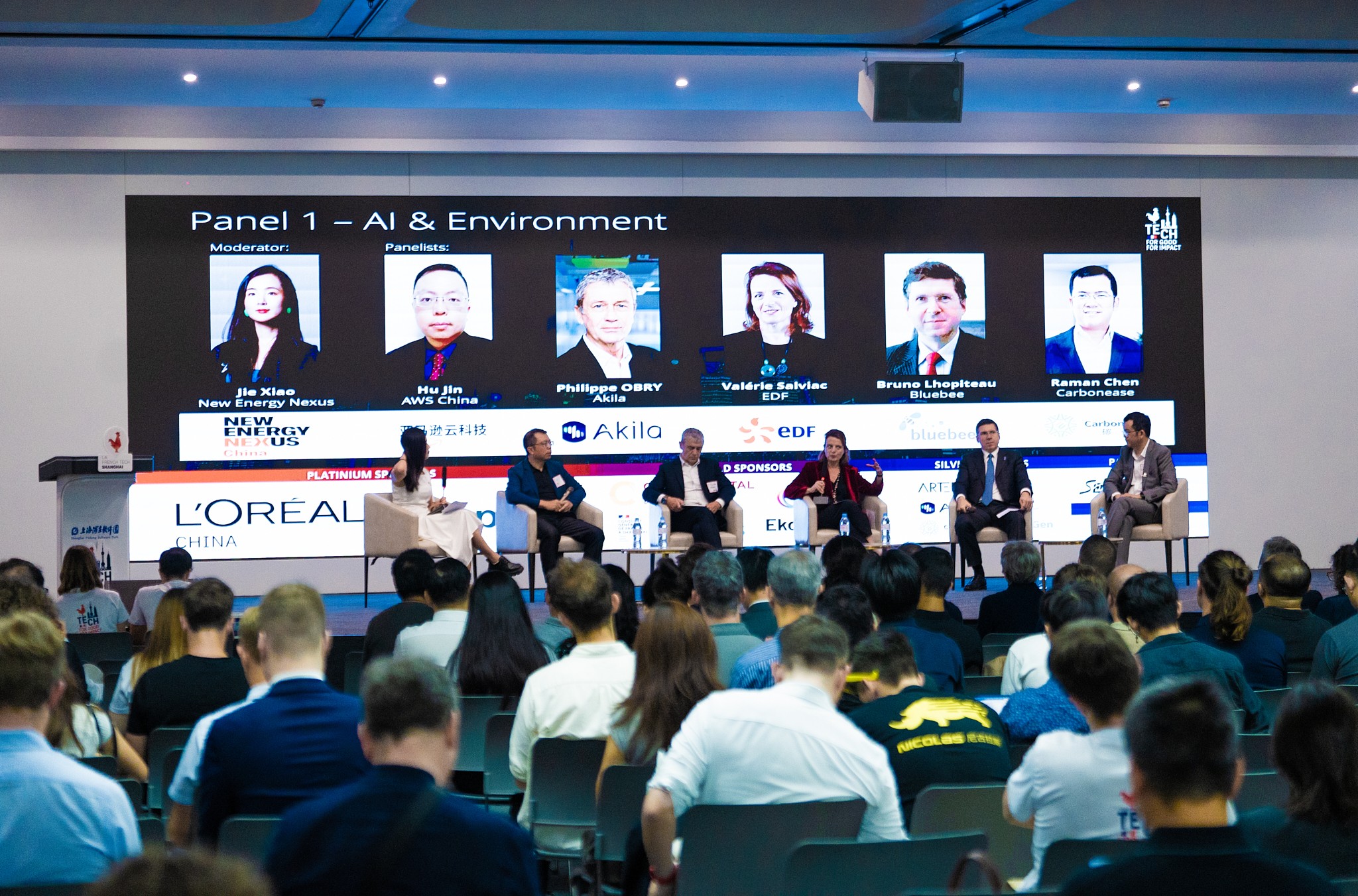
On Thursday, June 11, 2026, at the Shanghai Pudong Software Park, La French Tech Shanghai hosted Tech for Good 2026, an event focused on responsible AI development under the theme “AI: How do we get it right? Shaping AI for Real-World Impact.” The event was inaugurated by Mr. Joan Valadou, Consul General of France in Shanghai, who delivered the opening speech. The program featured four expert panels, startup pitches, and networking.
Bruno Lhopiteau, CEO of Bluebee Technologies and founder of Siveco China, participated in Panel 1 – Environment, alongside moderator Jie Xiao (New Energy Nexus China) and panelists Valérie Salviac (EDF), Hu Jin (Amazon Web Services), Philippe Obry (Akila), and Raman Chen (CarbonEase).
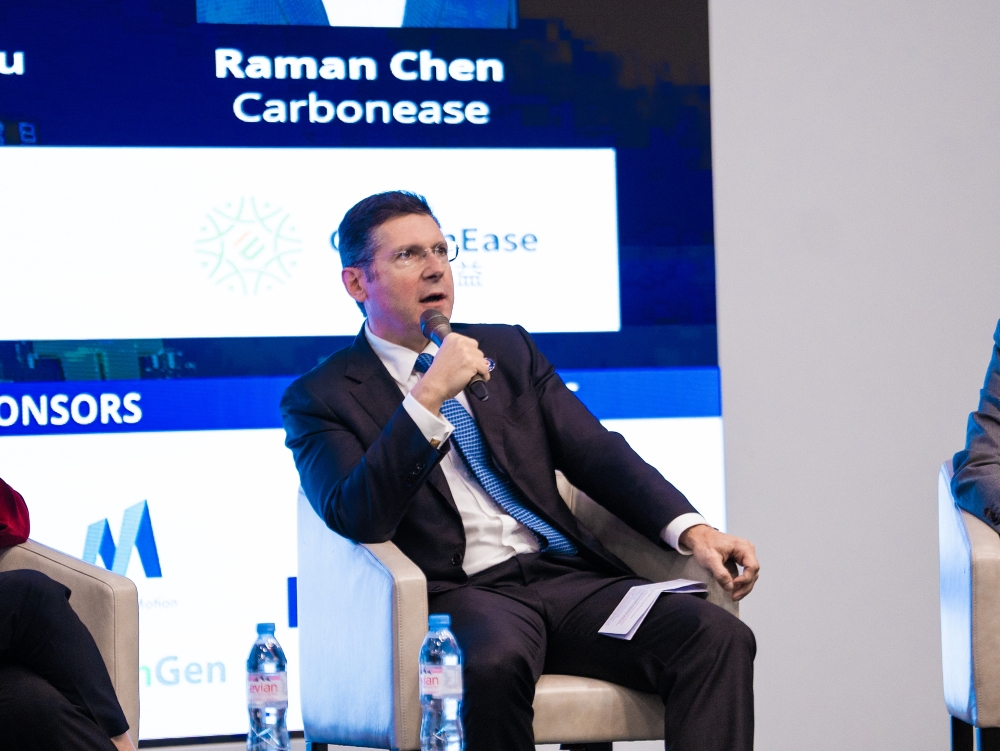
In his remarks, Bruno drew on over 20 years of experience helping Chinese power and water utilities optimize asset lifecycles, ensure regulatory compliance, and improve maintenance practices during China’s infrastructure boom. He addressed how AI infrastructure can scale credibly, with lower environmental impact and genuine real-world value, while highlighting the role of AI in asset management and maintenance.
Key Points from Bruno’s Contribution:
Biggest pressures on AI infrastructure
Bruno highlighted the critical handover phase from construction to operations in large-scale facilities. He noted that modern data centers rely on massive power and water infrastructures. Cooling systems alone can consume around 40% of total energy (with chillers accounting for roughly half of that). These advanced electromechanical assets are complex to maintain, and malfunctions can have potentially catastrophic impact.
He pointed out that modern automated infrastructures actually require higher skills to maintain, with regulatory concerns adding further pressure. Perhaps surprisingly for the audience, most data centers are still managed very traditionally, using simple planning systems, Excel spreadsheets, and paper. The potential to modernize asset management — in the same way power and water utilities have already done — is therefore huge.
Absorbing AI-driven growth
Drawing parallels with China’s infrastructure boom in power, water, and rail, Bruno explained how Siveco China and Bluebee Tech have supported massive growth by ensuring staff upskilling at both technical and management levels and promoting consistent best practices across sites amid skills and labor shortages. He positioned Smart O&M solutions (including AI) as essential tools for knowledge transfer, standardized best practices, and efficient scaling of operations. He clarified that the true value of AI in maintenance goes far beyond real-time monitoring or the common “predictive maintenance” hype (often limited to real-time monitoring). Instead, it should refocus on supporting technical teams, aiding management decisions, and enabling scenario comparisons to optimize asset health and risk management.
Greenwashing test and credibility
Transparency and verifiable data are essential, Bruno argued. Citing the Integrated Waste Management Facility (IWMF) in Hong Kong — where Siveco China’s Smart O&M system gives government stakeholders real-time access to KPIs based not only on sensor data but also on field input from plant personnel — he stressed the need for similar visibility on energy, water, emissions, safety, and contractor performance in AI data centers.
Local realities and the role of specialized providers
While AI infrastructure is global, many challenges (land, power, water, permitting, grid integration) are inherently local. Bruno noted that large owners routinely rely on specialized third-party providers, including local SMEs, to deliver credible solutions. He advised startups and suppliers that building trust with major infrastructure clients requires proven references, making early market entry more a sales and credibility challenge than a purely technical one.
Closing thought
In the final lightning round, Bruno emphasized that environmentally credible AI in industrial settings depends on integrating sensor data with human-context information — what people actually do on the ground — to empower better decisions and genuinely sustainable operations.
Bruno’s intervention underscored the practical lessons from two decades of mission-critical infrastructure digitalization in China and emerging markets, offering a grounded perspective on making AI infrastructure both scalable and responsible.